Why Is My Cat Meowing at Night? (7 Fixes)
Why is your cat meowing at night? The seven real causes, what actually stops it, the mistake that makes it worse, and when night crying means see a vet.
On this page
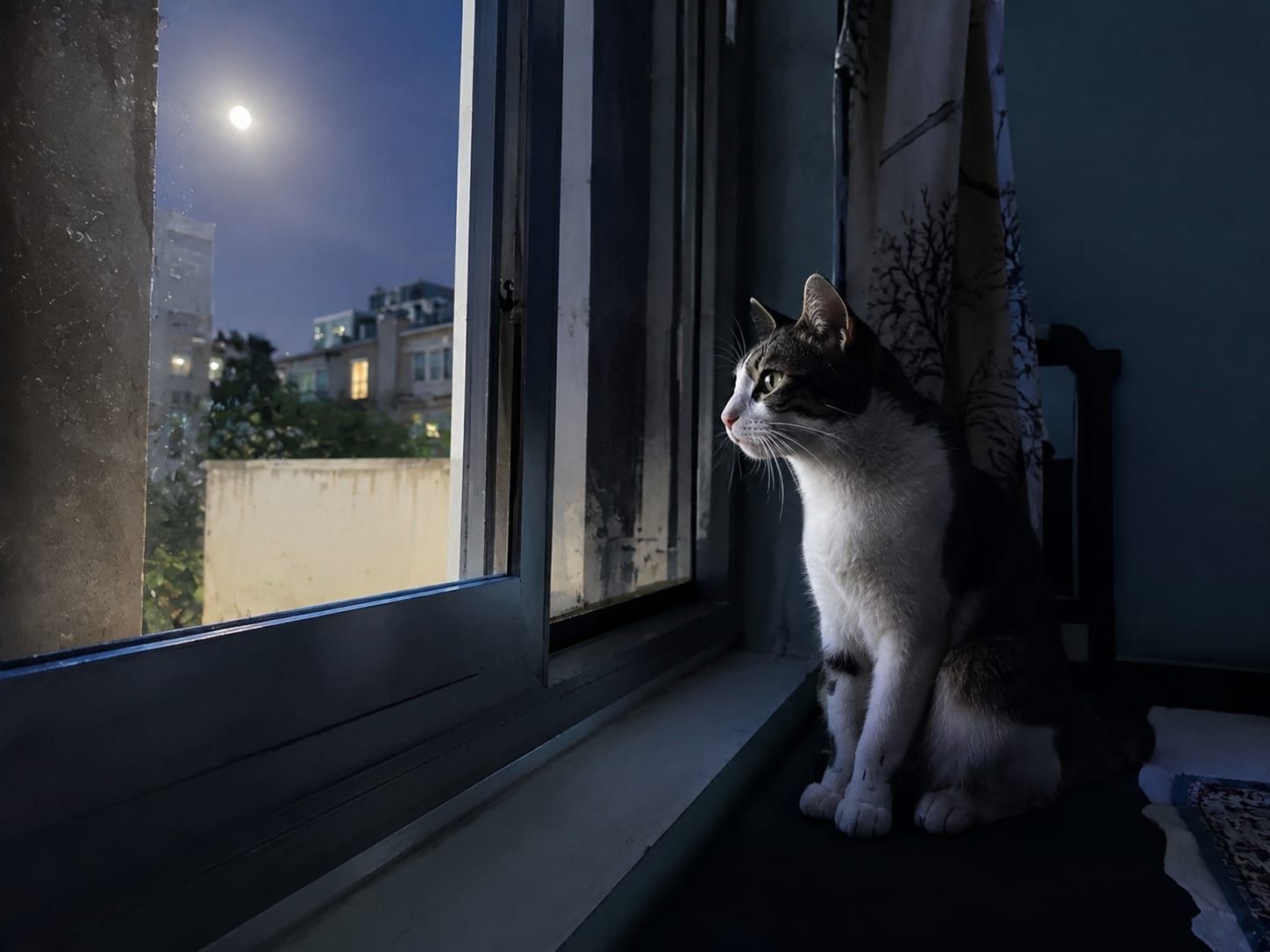
A cat meowing at night is one of those problems that feels personal at 3am. It is not. Night crying almost always has a specific, fixable cause — and the single most common reason it continues is that the usual response accidentally rewards it.
Here are the seven real causes, how to tell which one you have, and the fix for each.
The short version
Most night meowing is a schedule problem, not a behavior problem. Cats are crepuscular — wired to be active at dawn and dusk. A cat that sleeps all day wakes up ready to go exactly when you go to bed. Fix the daytime, and the night usually fixes itself.
Quick diagnosis
| What it looks like | Most likely cause |
|---|---|
| Starts right after you go to bed | Under-stimulated, slept all day |
| Around the same time every night | Learned habit or a feeding expectation |
| Stops the moment you get up | Attention-seeking that has been rewarded |
| Loud, wandering, disoriented howl | Age-related, or a medical cause |
| Started suddenly in an older cat | See a vet — thyroid, kidney, blood pressure |
| Near the litter box | Litter box problem or discomfort urinating |
| New cat, first few nights | Normal settling; give it two weeks |
1. Your cat slept all day
Cats are crepuscular, which means peak activity comes at dawn and dusk rather than the middle of the night. An indoor cat with nothing to do sleeps through the day, banks that energy, and spends it the moment the house goes quiet.
The fix: a hard play session in the evening, ideally 15–20 minutes with a wand toy, ending about an hour before bed. Play to genuine tiredness, not boredom — the goal is a cat that is panting slightly and flops down afterward.
Then feed a small meal immediately after play. Hunt, catch, eat, groom, sleep is the natural sequence, and following it deliberately is the single most effective thing you can do about night meowing.
2. It is working
This is the uncomfortable one. If getting up, feeding, talking, or even saying “stop it” reliably follows the meowing, you have taught your cat that meowing produces a human.
Cats learn this quickly, and — importantly — intermittent rewards make the habit stronger, not weaker. Ignoring it six nights and giving in on the seventh trains a more persistent cat than giving in every night would.
The fix: total non-response. No talking, no eye contact, no getting up, no opening the door. Every time.
Expect it to get worse before it gets better. This is called an extinction burst — the behavior escalates for a few nights when it stops working, then drops off. Most owners give up at exactly the point it was about to succeed. Budget for 7–14 rough nights.
3. Hunger, or the expectation of food
A cat fed once in the morning is genuinely hungry by 4am. Cats also anticipate routine precisely, so a cat fed at 6am will start asking at 5am, then 4:30am.
The fix: move the largest meal to just before your bedtime, and consider splitting food across more, smaller portions. A timed feeder that dispenses at 5am breaks the connection between your alarm and breakfast entirely, which stops your cat lobbying you for it.
Portion size matters here too — a cat that is genuinely underfed will keep asking. Our guide to how much to feed a cat covers the daily amount by body weight, and an automatic feeder is the practical way to serve an early meal without getting up for it.
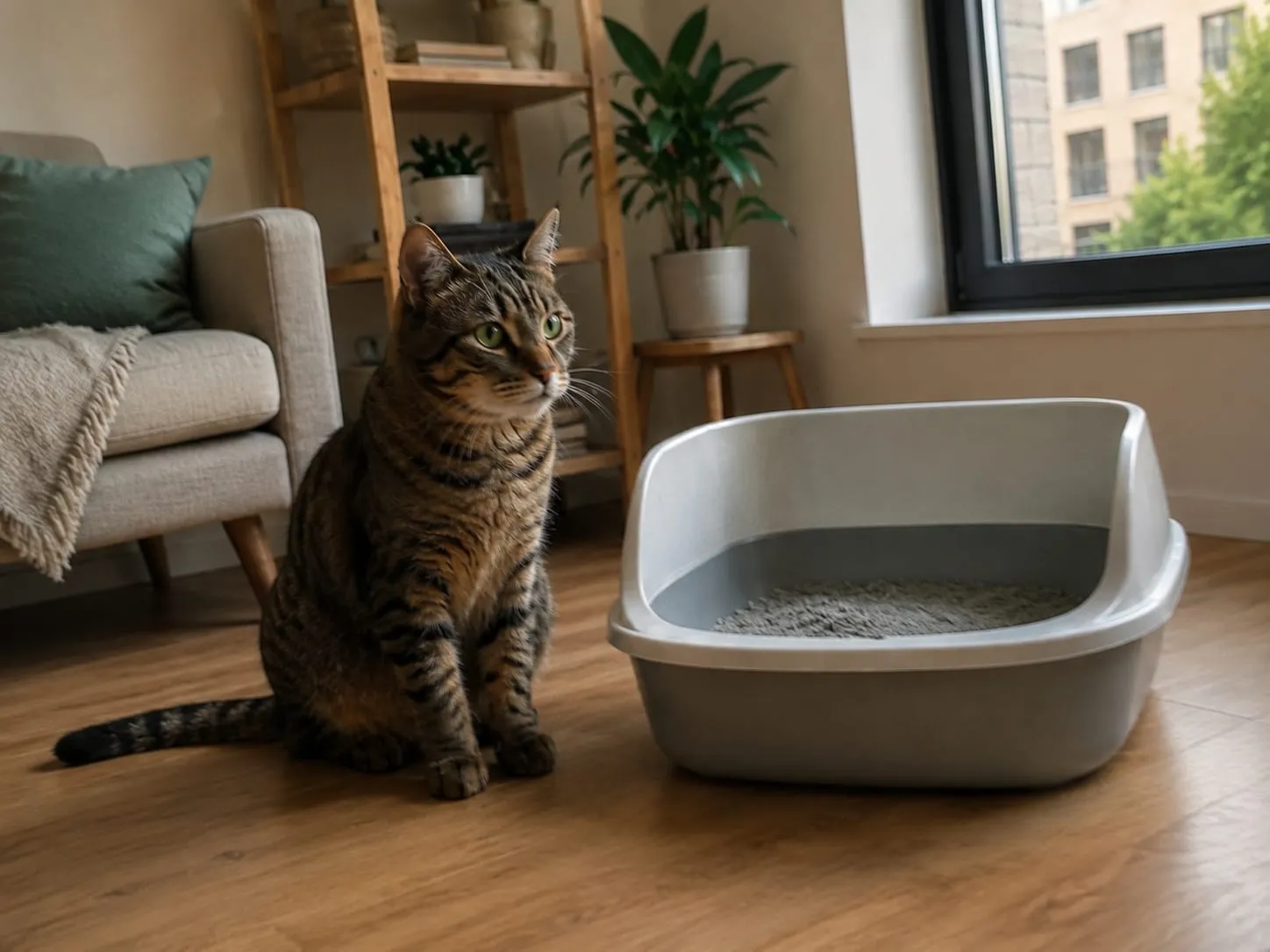
4. The litter box
Cats will vocalize about a litter box they do not want to use, and night is when the house is quiet enough for you to hear it. A box that was fine at 10pm can be unacceptable by 2am.
The fix: scoop last thing at night. If you have one cat, the standard advice is two boxes; for multiple cats, one per cat plus one. Keep them away from noisy appliances.
If the meowing happens in or near the box, or your cat gets in and out repeatedly, treat that as urgent rather than behavioral — see the medical section below. The guide to a cat not using the litter box walks through the usual causes, and litter choice for odor control matters more than most people expect.
5. Boredom and an under-enriched home
Play is not the same as enrichment. A cat that has nothing to look at, climb, or investigate for 14 hours will make its own entertainment.
The fix: vertical space, a window with a view, and food puzzles. Feeding at least one meal from a puzzle feeder rather than a bowl is a genuinely large change for a small effort — it converts eating from a ten-second event into twenty minutes of work.
Rotate toys rather than leaving them all out. Three toys that change weekly hold more interest than fifteen permanent ones.
6. Loneliness or a recent change
New home, new baby, a house move, a change in your working hours, or the loss of another pet all show up as night vocalizing. So does a new cat still settling in — that is normal and usually resolves within about two weeks.
The fix: consistency, more daytime contact, and patience. Where the trigger is a schedule change, adjusting the feeding and play routine to match the new schedule usually resolves it. A first-time owner setting up from scratch will find the routine basics in the first-time cat owner’s guide.
7. A medical cause
This is the one that matters most, and the reason not to treat night meowing as purely behavioral.
Several conditions cause increased vocalizing, particularly in older cats:
- Hyperthyroidism — common in cats over about 10, causes restlessness, weight loss despite a big appetite, and loud night crying
- High blood pressure and kidney disease — often alongside more drinking and more urinating
- Pain or arthritis — a cat that struggles to jump may cry at the bottom of a route it used to take easily
- Cognitive dysfunction — an older cat that howls while disoriented, often standing in a doorway or facing a wall
- Deafness — cats that cannot hear themselves often become much louder
See a vet if any of this applies
Night meowing that started suddenly, in a cat over about 10, or alongside weight loss, increased thirst, increased urination, disorientation, or straining in the litter box, needs a veterinary check rather than a behavior plan. A male cat straining without producing urine is a genuine emergency and should be seen immediately. This article covers common behavioral causes; it is not a diagnosis, and ruling out a medical cause comes first.
What actually stops it: the seven-day plan
Behavior changes need consistency more than cleverness. Run this for a week before deciding it has not worked:
- Two play sessions daily, one hard one about an hour before bed
- Largest meal last, immediately after evening play
- Scoop the litter box at bedtime, every night
- Zero response to night meowing — no talking, no getting up
- Timed feeder set for early morning, so you are not the food source
Keep the bedroom door decision consistent. A door that is usually closed but sometimes opens is far more interesting to a cat than one that never opens.
What makes it worse
- Giving in occasionally. Intermittent reinforcement builds the most persistent habits of all.
- Shouting. From a cat’s point of view, you responded. Negative attention is still attention.
- Punishment, spray bottles, or shutting the cat somewhere as a consequence. These create anxiety, and anxious cats vocalize more.
- Free-feeding a full bowl at bedtime if hunger was never the cause — you just add weight without changing the behavior.
- Assuming it is behavioral in an older cat. In cats over 10, medical causes are common enough that it is worth a vet visit first.
How long it takes
If the cause is a schedule or stimulation problem, most owners see real improvement within 7 to 14 days of consistent evening play and a late meal.
If the cause is a learned attention habit, expect the extinction burst first — several nights noticeably worse, then a fairly quick drop-off. Three weeks of total consistency resolves most cases.
If nothing has changed after three consistent weeks, stop iterating on the routine and book a vet appointment. Persistent night vocalizing that does not respond to a solid behavior plan is one of the more reliable early signals of an underlying medical problem.
The bottom line
Night meowing is usually a cat with too much unspent energy, an empty stomach, or a habit that keeps working. Play hard in the evening, feed last thing, scoop the box at night, and respond to nothing.
The hardest part is not the plan — it is the week where it gets worse before it gets better.
Frequently asked questions
Why does my cat meow at night all of a sudden?+
A sudden change is more concerning than a long-standing habit. Common triggers include a change in your schedule, a house move, a new pet, or a change in feeding times. But sudden night vocalizing in a cat over about 10 is frequently medical — hyperthyroidism, high blood pressure, kidney disease and cognitive dysfunction all cause it. If it started abruptly, book a vet check before working on behavior.
Should I ignore my cat meowing at night?+
Yes, if a medical cause has been ruled out and the meowing is attention-seeking. But ignoring has to be total and consistent — no talking, no eye contact, no getting up, not even saying stop. Cats learn from intermittent rewards, so giving in one night in seven builds a more persistent habit than giving in every night. Expect several nights of worse behavior before it improves.
How do I stop my cat waking me at 4am for food?+
Move the largest meal to just before your bedtime, and set a timed automatic feeder to dispense in the early morning. The feeder is the key part: it breaks the link between you getting up and food appearing, so there is no longer any point in waking you. Getting up to feed a crying cat, even once, teaches the opposite.
Why does my old cat cry at night?+
Older cats vocalize at night for reasons that are usually medical rather than behavioral. Hyperthyroidism, high blood pressure, kidney disease, arthritis pain, deafness and cognitive dysfunction all cause night crying. A senior cat that howls while appearing disoriented, or that has also lost weight or started drinking more, should be seen by a vet rather than managed with a behavior plan.
How long does it take to stop night meowing?+
With consistent evening play and a late meal, most schedule-related cases improve within 7 to 14 days. Attention-seeking habits take longer, usually about three weeks, and get noticeably worse for the first few nights once the meowing stops working. If nothing has changed after three consistent weeks, see a vet.
Does playing with my cat before bed actually help?+
It is the single most effective change for most cats. Cats are crepuscular, so a cat that sleeps all day peaks in energy exactly when you go to bed. A hard 15 to 20 minute wand-toy session about an hour before bedtime, followed immediately by a meal, follows the natural hunt-eat-groom-sleep sequence and settles most cats for the night.
Is my cat meowing at night because it is lonely?+
It can be, particularly after a change like a house move, a new baby, a schedule change, or the loss of another pet. A newly adopted cat vocalizing at night is usually just settling in and typically improves within two weeks. More daytime interaction and a consistent routine help, but loneliness is worth considering only after hunger, energy and medical causes have been addressed.
Will getting a second cat stop the night meowing?+
Not reliably, and it can make things worse. A second cat is a significant change that may add stress rather than company, and two under-stimulated cats can keep each other active at night. Work through the routine, feeding and medical causes first — adopting another animal is a large commitment to take on as a behavior fix.
Sources & further reading
This article draws on guidance from these trusted organizations. Always consult your own veterinarian for advice specific to your pet.
Written by
Raghav DeedwaniyaFounder & Editor
Raghav Deedwaniya is the founder and editor of Petifys, and the author behind its pet care content. I’m a lifelong pet owner, not a veterinarian — I’ve been around dogs since childhood, and that hands-on experience is what got me into writing about responsible pet ownership. At Petifys I create practical, easy-to-understand guides, each one carefully researched using trusted sources such as the AVMA, ASPCA and International Cat Care. My aim is to help you make informed everyday decisions — but for anything involving your pet’s health, always consult a qualified veterinarian who can examine your animal in person.
Disclosure: Some links in this article are affiliate links. If you buy through them we may earn a small commission at no extra cost to you. We only recommend products we believe in. Learn more.