What Can Guinea Pigs Eat? Safe Food List
What can guinea pigs eat safely? A daily vegetable list, safe fruits, the foods that are toxic, and how much to feed — with a simple daily chart.
On this page
- The guinea pig diet in four parts
- Why hay matters more than anything else
- Safe vegetables to feed every day
- Vegetables for a few times a week
- Fruit — treats, not food
- Foods that are never safe
- Vitamin C: the thing that makes guinea pigs different
- How much to feed, and when
- A simple daily routine
- The bottom line
Working out what guinea pigs can eat is the most confusing part of owning one, because their diet is genuinely unusual. Guinea pigs cannot make their own vitamin C, they need to chew almost constantly to stop their teeth overgrowing, and several foods that are perfectly fine for a rabbit will make a guinea pig ill.
Here is the whole diet in one place: what to feed daily, what to give occasionally, and the foods that are never safe.
The short version
Unlimited hay is about 80% of the diet. Add roughly 1 cup of fresh vegetables daily, mostly leafy greens, plus 1/8 cup of plain pellets. Fruit is a treat, not a food group. Never feed onion, garlic, potato, or iceberg lettuce.
The guinea pig diet in four parts
| Food | How much | Why it matters |
|---|---|---|
| Grass hay | Unlimited, always available | 80% of the diet — wears teeth down, keeps the gut moving |
| Fresh vegetables | ~1 cup (80–100g) per pig, daily | The main source of vitamin C |
| Plain pellets | ~1/8 cup (30g) per pig, daily | Backup vitamins and minerals |
| Fruit | 1–2 small pieces, twice a week | Treat only — high in sugar |
Everything below is detail on those four lines. If you remember only one thing, make it the hay: a guinea pig eating unlimited hay and a sensible cup of greens is already most of the way to a good diet.
Why hay matters more than anything else
Guinea pig teeth never stop growing. The only thing that wears them down is hours of side-to-side grinding, and hay is the only food that provides it. Pellets and vegetables are chewed too quickly to do the job.
A guinea pig without constant hay develops overgrown molars — painful, expensive to treat, and one of the most common reasons guinea pigs stop eating. The fiber also keeps the digestive system moving, because guinea pig guts are built to process food more or less continuously.
Which hay: Timothy, orchard, meadow, or oat hay for adults. Alfalfa is too high in calcium and protein for a healthy adult and can contribute to bladder stones, so it is reserved for pigs under six months, or pregnant and nursing sows.
Hay should be available all the time, not served as a meal. A pile roughly the size of your guinea pig, refreshed daily, is the usual guide.
Safe vegetables to feed every day
These are the workhorses. Aim for a mix rather than a large amount of any one thing, and build most of the cup from leafy greens.
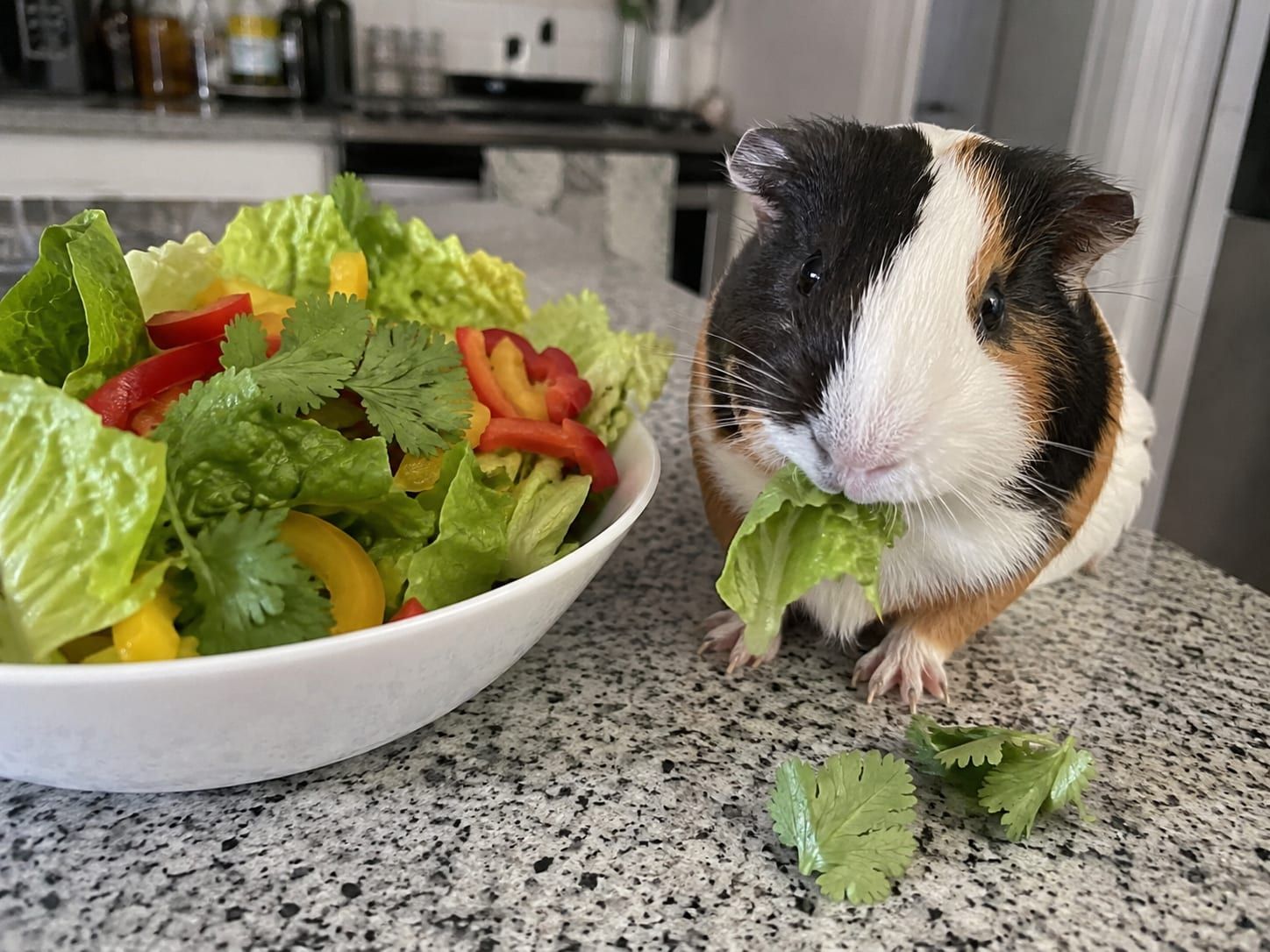
- Romaine lettuce — the default green, good vitamin C, low calcium
- Bell peppers (any color) — the best vitamin C source, and most pigs love them
- Cilantro — very popular, safe daily
- Green leaf and red leaf lettuce — safe daily
- Cucumber — hydrating, low nutrition, fine as filler
Vegetables for a few times a week
Safe, but not for the daily rotation — usually because of calcium or the risk of gas.
- Kale — excellent vitamin C but high calcium, so 2–3 times a week
- Spinach — high in oxalates, keep it occasional
- Carrot — high in sugar; a small slice, or better, the leafy tops
- Broccoli — high in vitamin C but causes bloating in quantity
- Tomato — flesh only; the leaves and stem are toxic
- Parsley, dandelion greens, endive — good, but strong and high in calcium
Why variety beats any single best vegetable
Rotating vegetables matters more than finding the perfect one. Variety spreads the calcium and oxalate load, keeps a fussy pig interested, and covers what no single vegetable provides. A simple approach: one or two lettuce leaves plus a slice of bell pepper daily, then rotate a third item through the week.
Fruit — treats, not food
Guinea pigs have a sweet tooth and no judgment. Fruit is high in sugar and, fed daily, contributes to weight gain and mouth sores.
Safe in small amounts, roughly twice a week: apple (no seeds), blueberries, strawberry, melon, an orange segment, a very small piece of banana, and kiwi, which is unusually high in vitamin C.
A portion is genuinely small — one strawberry, or two blueberries, or a thumbnail-sized piece of apple. Not a bowl.
Foods that are never safe
This list matters more than everything above. Some of these are toxic; others cause serious digestive problems.
- Onion, garlic, leek, chives — toxic
- Potato and potato peel — toxic
- Avocado — toxic
- Rhubarb, including the leaves — toxic
- Iceberg lettuce — almost no nutrition, high water, causes diarrhea
- Nuts, seeds, corn kernels — choking risk and far too fatty
- Bread, crackers, cereal, pasta — the gut cannot process starch like this
- Dairy, meat, eggs — guinea pigs are strict herbivores
- Chocolate and anything sugary — toxic
- Grass clippings from a mower — ferment fast and cause dangerous bloat (fresh-picked grass is fine)
Also avoid any muesli-style mix with colorful bits, seeds and flakes. Guinea pigs pick out the sugary pieces and leave the fibrous ones, which produces an unbalanced diet and dental disease. Plain, uniform pellets only.
Vitamin C: the thing that makes guinea pigs different
Guinea pigs are one of the few mammals — along with humans — that cannot make their own vitamin C. Without a dietary source they develop scurvy, which shows up as a rough coat, reluctance to move, swollen joints, bleeding gums and loss of appetite.
An adult needs roughly 10–30mg of vitamin C daily, more if pregnant or unwell. The reliable ways to provide it:
- Bell peppers daily — the easiest and most effective source
- Fresh pellets — vitamin C degrades fast, so buy small bags and replace them within about three months of opening
- A vitamin C tablet, if your vet recommends one
Do not put vitamin C drops in the water bottle. They degrade within hours in light, they make the water taste unpleasant so pigs drink less, and you have no idea how much was actually consumed. This is the most common well-meaning mistake in guinea pig care.
How much to feed, and when
Two vegetable feeds a day — morning and evening — works better than one large pile, because guinea pigs graze rather than eat meals.
- Hay: topped up whenever it runs low, which is daily
- Vegetables: about 1 cup per pig per day, split across two servings
- Pellets: 1/8 cup per pig per day, measured, not free-poured
- Water: fresh daily, in a bottle and ideally also a heavy bowl
Remove uneaten fresh food after a few hours. Wilted greens sitting in bedding attract flies and spoil quickly.
Introduce any new vegetable one at a time, in a small amount, then wait a day or two. A guinea pig gut that meets five new foods at once will usually produce soft stools, and you will have no idea which food caused it.
When a food problem becomes an emergency
A guinea pig that stops eating needs veterinary attention the same day, not the next. Their digestive system is built to run continuously and can shut down within about 12 hours of an empty gut. Soft stools lasting more than a day, a hunched posture, or drooling and dropped food (a sign of dental pain) all warrant a call to a vet who treats exotic pets. This article covers diet, not diagnosis.
A simple daily routine
Once it clicks, feeding takes about three minutes a day:
- Morning: top up hay, serve half the vegetables, check the water bottle
- Evening: second half of vegetables, measured pellets, remove leftovers
- Twice a week: swap a small fruit treat in place of part of the veg
The guinea pig care guide for beginners covers the rest of the setup — cage size, bedding and companionship. And once the diet is right, knowing what guinea pig sounds mean tells you whether it is working: a pig that wheeks at the fridge and chuts over its hay is a pig that is doing well.
If you also keep rabbits, do not run one shared bowl. What rabbits eat overlaps but is not identical, and rabbit pellets contain no added vitamin C. The rabbit care guide explains where the two diets diverge.
The bottom line
Unlimited grass hay, about a cup of mixed vegetables built mostly from leafy greens, an eighth of a cup of plain pellets, and fruit only as an occasional treat. Bell pepper most days covers vitamin C. Skip the muesli mixes and the water-bottle vitamin drops.
Get those four things right and you have covered almost everything that goes wrong with guinea pig diets.
Frequently asked questions
What can guinea pigs eat every day?+
Unlimited grass hay, about 1 cup of fresh vegetables, and roughly 1/8 cup of plain pellets per guinea pig. Vegetables safe for daily feeding include romaine lettuce, bell peppers, cilantro, green or red leaf lettuce, and cucumber. Bell pepper is worth including most days because it is the easiest reliable source of vitamin C.
What vegetables are toxic to guinea pigs?+
Onion, garlic, leek and chives are toxic, as are potato and potato peel, avocado, and rhubarb including the leaves. Tomato flesh is fine but the leaves and stem are toxic. Iceberg lettuce is not toxic but has almost no nutritional value and its high water content causes diarrhea, so it is best avoided.
Can guinea pigs eat fruit?+
Yes, but only as a treat about twice a week. Safe options include apple without seeds, blueberries, strawberry, melon, orange and a very small piece of banana. Portions should be genuinely small — one strawberry or two blueberries is a serving. Fruit is high in sugar and daily feeding leads to weight gain and mouth sores.
Do guinea pigs need vitamin C supplements?+
They need a daily dietary source, because guinea pigs cannot make their own vitamin C — roughly 10 to 30mg a day. Fresh bell peppers plus fresh pellets usually cover it. Avoid vitamin C drops added to the water bottle: the vitamin degrades within hours, the taste puts guinea pigs off drinking, and you cannot tell how much was consumed. Ask your vet before using tablets.
How much hay should a guinea pig eat?+
Unlimited, available at all times — hay should make up around 80% of the diet. A useful guide is a pile roughly the size of your guinea pig, refreshed daily. Timothy, orchard, meadow or oat hay suits adults. Alfalfa is too high in calcium for healthy adults and is reserved for guinea pigs under six months old, or pregnant and nursing sows.
Can guinea pigs eat carrots?+
In small amounts, a few times a week. Carrot is high in sugar, so it works better as an occasional item than a daily one, and the leafy carrot tops are actually a better choice than the root. A slice or two rather than a whole carrot is the right portion.
Why should I avoid muesli-style guinea pig food?+
Mixes with colorful flakes, seeds and pieces let guinea pigs pick out the sugary parts and leave the fibrous ones. The result is an unbalanced diet, weight gain and dental disease, because the pieces they avoid are the ones that wear teeth down. Plain, uniform pellets prevent selective feeding entirely.
How do I introduce a new vegetable safely?+
One new food at a time, in a small amount, then wait a day or two before adding another. Guinea pig digestion reacts badly to sudden change, and introducing several new foods at once usually produces soft stools with no way to tell which food was responsible. If stools stay soft for more than a day, stop the new food and contact a vet.
Sources & further reading
This article draws on guidance from these trusted organizations. Always consult your own veterinarian for advice specific to your pet.
Written by
Raghav DeedwaniyaFounder & Editor
Raghav Deedwaniya is the founder and editor of Petifys, and the author behind its pet care content. I’m a lifelong pet owner, not a veterinarian — I’ve been around dogs since childhood, and that hands-on experience is what got me into writing about responsible pet ownership. At Petifys I create practical, easy-to-understand guides, each one carefully researched using trusted sources such as the AVMA, ASPCA and International Cat Care. My aim is to help you make informed everyday decisions — but for anything involving your pet’s health, always consult a qualified veterinarian who can examine your animal in person.
Disclosure: Some links in this article are affiliate links. If you buy through them we may earn a small commission at no extra cost to you. We only recommend products we believe in. Learn more.